✦ Now accepting international inquiries, Ship worldwide from Jaipur✦ Students from 12+ countries trained✦ Next batch begins Early 2027✦ Now accepting international inquiries, Ship worldwide from Jaipur
History15 April 20267 min read
The History of Kundan Jewellery: From Mughal Courts to Modern Day
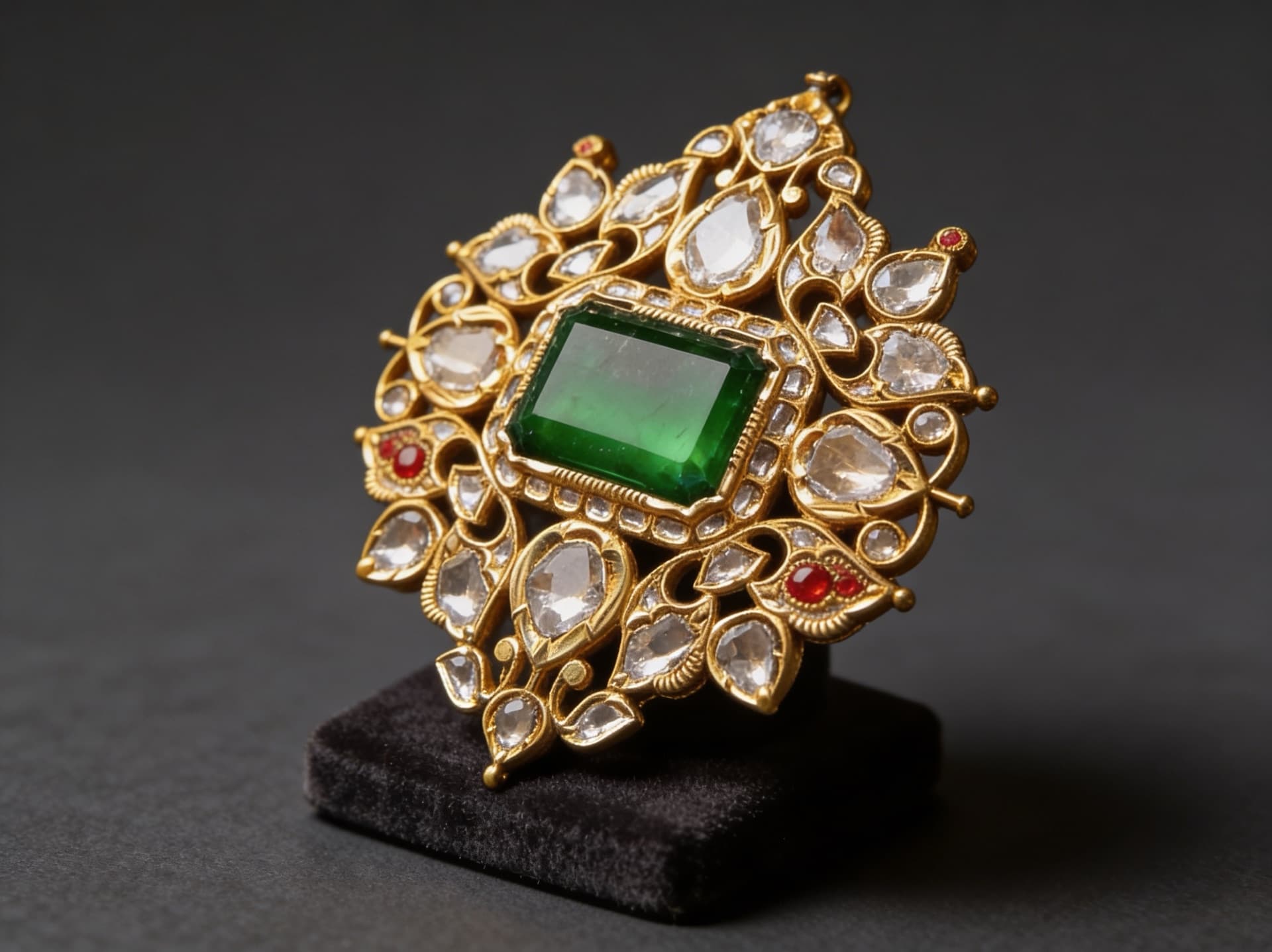
Kundan jewellery is among the oldest forms of jewellery made in India, with roots stretching back to the Mughal era and beyond. The word 'Kundan' refers to highly refined gold, and the technique involves setting precious and semi-precious stones into a gold framework using thin strips of pure gold foil.
The craft first flourished under the patronage of Mughal emperors, who brought skilled artisans from Lahore and Delhi to the courts of Rajasthan. Raja Man Singh I of Amber is widely credited with establishing Jaipur as the centre of Kundan production in the 16th century, inviting master craftsmen to settle in the city's Johari Bazaar.
Want the full skill?
Our training programs teach you the ancient techniques hands-on, from a master artisan in Jaipur.
Explore Training ProgramsWhat makes Kundan unique is the complete absence of any chemical bonding agent. The stones are held in place purely by the pressure of gold foils carefully pressed around them. This requires extraordinary patience and precision. A single necklace can take weeks to complete, with the artisan working stone by stone.
Over the centuries, Kundan jewellery became inseparable from Indian bridal traditions. A bride's trousseau was considered incomplete without at least one Kundan set, and families would commission pieces months in advance for weddings. This tradition continues to this day, though the craft faces new challenges from machine-made imitations.
Today, authentic Kundan jewellery is still made by hand in the workshops of Jaipur's old city. The number of master artisans has declined, but those who remain carry forward a tradition that has survived wars, empires, and the march of industrialization. Learning from one of these masters is the only way to truly understand the depth of this art.
Inquire Now
Whether you seek a timeless piece of jewellery or wish to learn the ancient craft, we're here for you.