✦ Now accepting international inquiries, Ship worldwide from Jaipur✦ Students from 12+ countries trained✦ Next batch begins Early 2027✦ Now accepting international inquiries, Ship worldwide from Jaipur
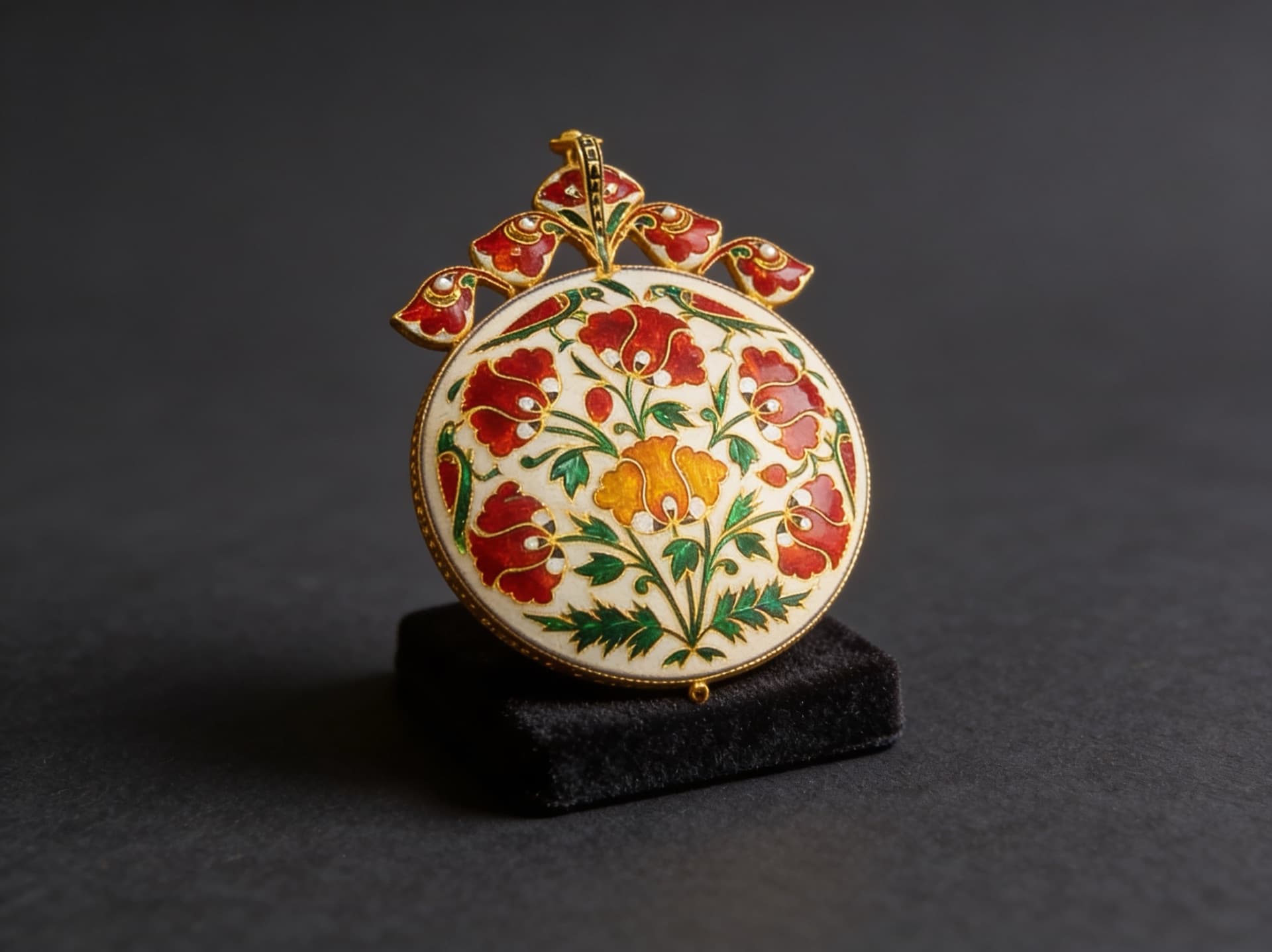
Meenakari, the art of enamelling on metal, arrived in India through Persia. The Mughals brought it to Rajasthan, where it merged with the existing Kundan tradition to create something the world had never seen: jewellery that was equally beautiful on both sides.
The process begins with ground mineral pigments. Traditional Meenakari uses five colours: red (from iron oxide), green (from copper oxide), blue (from cobalt), white (from tin oxide), and a deep saffron. These pigments are ground to a fine powder and mixed with oil to create a paste.
Want the full skill?
Our training programs teach you the ancient techniques hands-on, from a master artisan in Jaipur.
Explore Training ProgramsThe artisan applies this paste into tiny grooves carved into the metal surface, working with tools no thicker than a needle. The piece is then fired in a kiln at precisely controlled temperatures. Each colour fires at a different temperature, so a multi-coloured piece requires multiple firings, each one carrying the risk of damaging previously applied colours.
The most prized Meenakari work depicts peacocks, lotus flowers, and scenes from Rajasthani folklore. Master artisans can paint these motifs freehand at microscopic scales, a skill that takes years to develop. The colours remain vivid for centuries because they are literally fused into the metal.
What distinguishes Jaipur Meenakari from enamel work done elsewhere in the world is the depth of colour and the complexity of the designs. European enamel tends toward geometric patterns; Jaipur Meenakari tells stories in colour.
Inquire Now
Whether you seek a timeless piece of jewellery or wish to learn the ancient craft, we're here for you.